<
<
<
<
|
|
|
|
||
|
|
|
|||
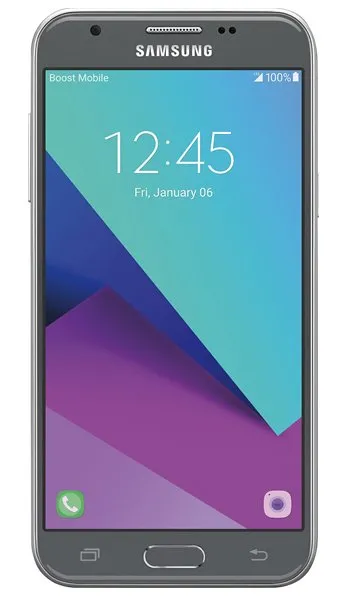
Brief information about compared phones: Huawei Mate 40 Pro , Samsung Galaxy J3 EmergeHuawei Mate 40 Pro 2020 year of release, cpu - Octa-core (1x3.13 GHz Cortex-A77 & 3x2.54 GHz Cortex-A77 & 4x2.05 GHz Cortex-A55), screen 6.76", with resolution 1344x2772. Smartphone has 13 megapixel front camera and 50 megapixel main camera. Samsung Galaxy J3 Emerge 2017 year of release, cpu Octa-core 1.4 GHz Cortex-A53 Sprint -Quad-core 1.4 GHz Cortex-A53 BoostMobile, screen 5", with resolution 720x1280. Smartphone has 2 megapixel front camera and 5 megapixel main camera. |
||||
| Display | Technology | OLED | TFT | |
| Touchscreen | capacitive touchscreen | capacitive touchscreen | ||
| Display colors | 16M | 16M | ||
| Screen size | 6.76" inc | 5" inch | ||
| Screen area | 115.7 cm2 | 68.9 cm2 | ||
| Screen format | 18.5:9 (height:width) | 16:9 (height:width) | ||
| Screen to body ratio | 94.1% | 69.8% | ||
| Screen resolution | 1344 x 2772 px | 720 x 1280 px | ||
| PPI /points per inch/ | 294 PPI | |||
| Camera and Video | Rear camera, main | 50 MP, Triple | 5 MP, Single | |
| Camera specs | -50 MP, f/1.9, 23mm (wide), 1/1.28'', 1.22µm, omnidirectional PDAF, Laser AF -12 MP, f/3.4, 125mm (periscope telephoto), PDAF, OIS, 5x optical zoom -20 MP, f/1.8, 18mm (ultrawide) | 5 MP, AF, f/1.9 | ||
| Functions | HDR, panorama | LED flash, HDR | ||
| Video | 4K@30/60fps, 1080p@30/60/240fps | 1080p@30fps (J3 Emerge, J3 Eclipse, Galaxy J3 Prime); 720p@30fps (Amp Prime 2) | ||
| Front camera, selfie | 13 MP, Dual | 2 MP, Single | ||
| Specifications | 13 MP, f/2.4, 18mm (ultrawide) TOF 3D, (depth/biometrics sensor) | 2 MP, f/2.2 | ||
| DxOMark Main Score | 136 | |||
| DxOMark Photo | 110 | |||
| DxOMark Video | 96 | |||
| DxOMark Selfie Score | 104 | |||
| Performance | Operating system OS | Android 10, EMUI 11, no Google Play Services | Android 6.0.1 (Marshmallow)Android 7.0 (Nougat) - Amp Prime 2 | |
| Chipset | - HiSilicon Kirin 9000 5G (5 nm) | Qualcomm MSM8937 Snapdragon 430 (28 nm) Sprint -Qualcomm MSM8917 Snapdragon 425 (28 nm) BoostMobile, Cricket, T-Mobile | ||
| Processor CPU | - Octa-core (1x3.13 GHz Cortex-A77 & 3x2.54 GHz Cortex-A77 & 4x2.05 GHz Cortex-A55) | Octa-core 1.4 GHz Cortex-A53 Sprint -Quad-core 1.4 GHz Cortex-A53 BoostMobile, Cricket, T-Mobile | ||
| Graphics processor GPU | - Mali-G78 MP24 | Adreno 505 Sprint -Adreno 308 BoostMobile, Cricket, T-Mobile | ||
| External memory | NM (Nano Memory), up to 256GB (uses shared SIM slot) | microSD, up to 256 GB (dedicated slot) | ||
| Internal memory | 256GB 8GB RAM | 16 GB, 1.5 GB RAM | ||
| GeekBench 4 Single Core | 624 | |||
| GeekBench 4 Multi-Core | 1621 | |||
| GeekBench 4 RenderScript | 1157 | |||
| Antutu 8 score | 661059 | |||
| General specs | Release date | 2020, October 22 | 2017, January | |
| Dimensions (HxWxD) | 162.9 Х 75.5 Х 9.1 mm | 140.9 Х 70.1 Х 8.7 mm | ||
| Weight | 212 g | 147 g | ||
| Colors | Mystic Silver, White, Black, Green, Yellow | Silver, Black | ||
| Battery | 4400 mAh, Li-Po, non-removable | 2600 mAh, Removable Li-Ion | ||
| Approximate price | 1200 EUR | 235 USD | ||
| Battery life | Stand by time- Up to 408 h (3G) Talking time- Up to 23 h (3G) Music play - Up to 71 h | |||
| Body build | Glass front, glass back, aluminum frame | |||
| Communication and Connectivity | SIM card | Single SIM (Nano-SIM and/or eSIM), Hybrid Dual SIM (Nano-SIM, dual stand-by), Dual SIM (one Nano-SIM, one eSIM | Nano-SIM | |
| Network | Show all network frequencies: -2G - GSM 850 / 900 / 1800 / 1900 - SIM 1 & SIM 2 (dual-SIM model only) -3G - HSDPA 800 / 850 / 900 / 1700(AWS) / 1900 / 2100 -4G - 1, 2, 3, 4, 5, 6, 7, 8, 9, 12, 17, 18, 19, 20, 26, 28, 32, 34, 38, 39, 40, 41, 42 -5G - 1, 77, 78, 79, 80, 84 SA/NSA/Sub6 | Show all network frequencies: -2G - GSM 850 / 900 / 1800 / 1900 CDMA 800 / 1900 -3G - HSDPA 850 / 1700(AWS) / 1900 -4G - LTE band 2(1900), 4(1700/2100), 5(850), 12(700), 25(1900), 26(850), 41(2500) | ||
| Speed | HSPA 42.2/5.76 Mbps, LTE-A, 5G | HSPA 42.2/5.76 Mbps, LTE-A Cat4 150/50 Mbps, EV-DO Rev.A 3.1 Mbps | ||
| GPRS | Yes | Yes | ||
| Edge | Yes | Yes | ||
| Wi-Fi | Wi-Fi 802.11 a/b/g/n/ac/6, dual-band, Wi-Fi Direct, hotspot | Wi-Fi 802.11 a/b/g/n, dual-band, WiFi Direct, hotspot | ||
| GPS | Yes, with dual-band A-GPS, GLONASS, BDS, GALILEO, QZSS, NavIC | Yes, with A-GPS, GLONASS | ||
| NFC | Yes | |||
| USB | USB Type-C 3.1, USB On-The-Go | microUSB 2.0 | ||
| Bluetooth | 5.2, A2DP, LE | 4.2, A2DP, LE | ||
| Music and Audio | Radio | No | FM radio (operator dependant) | |
| Headphone jack | No | Yes | ||
| Others | - HDR10 -90Hz | Active noise cancellation with dedicated mic | ||
| Other features | Dop | - Sensors - Face ID, fingerprint (under display, optical), accelerometer, gyro, proximity, barometer, compass, color temperature sensor , Infrared port - Fast charging 66W -Fast wireless charging 50W -Reverse wireless charging 5W - IP68 dust/water resistant | Sensors Accelerometer, gyro, proximity, compass - Versions: Galaxy J3 Emerge J327P (Sprint); Galaxy J3 Eclipse J327V (Verizon); Galaxy J3 Prime J327T (T-Mobile); Galaxy Express Prime 2 J327A (AT&T); Galaxy Amp Prime 2 J327A (Cricket) | |