You are using an outdated browser. For a faster, safer browsing experience, upgrade for free today.<

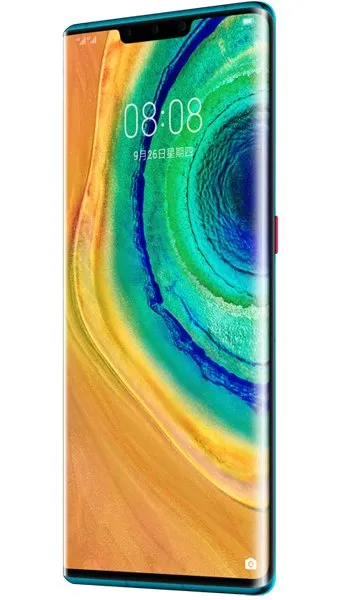
Huawei Mate 30 Pro vs OnePlus 8

Compare recorded specifications, size and practical differences.
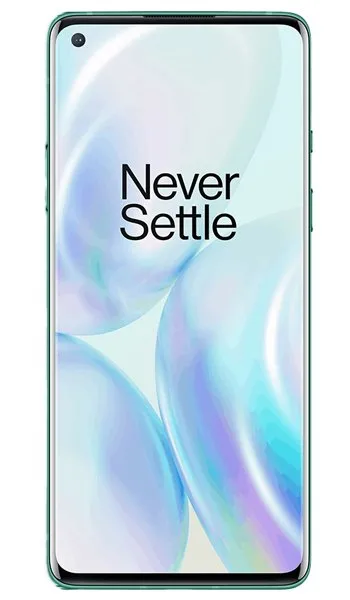
OnePlus 8

OnePlus 8

Replace 8
Remove 8
+ Add a third phone

Key differences

Calculated from recorded specifications using minimum difference thresholds. These are differences, not an overall ranking. For three phones, numeric highlights compare the two extremes.

  • Weight8: 18 g lighter8: 180 g · Mate 30 Pro: 198 g
  • ChipsetHiSilicon Kirin 990 (7 nm+) / Qualcomm SM8250 Snapdragon 865 (7 nm+)Mate 30 Pro: HiSilicon Kirin 990 (7 nm+) · 8: Qualcomm SM8250 Snapdragon 865 (7 nm+)
  • Rear camera layoutQuad / TripleMate 30 Pro: Quad · 8: Triple
  • Depth8: 0.8 mm thinner8: 8 mm · Mate 30 Pro: 8.8 mm
  • HeightMate 30 Pro: 2.1 mm shorterMate 30 Pro: 158.1 mm · 8: 160.2 mm
  • Release year2019 / 2020Mate 30 Pro: 2019 · 8: 2020

Physical size

Relative size, not calibrated actual size. Front and side outlines share one scale and a bottom baseline. Generic outlines use recorded body dimensions, excluding camera bumps.

Front
Mate 30 Pro: 158.1 × 73.1 mm 1 8: 160.2 × 72.9 mm 2
Side
Mate 30 Pro: 158.1 × 8.8 mm 1 8: 160.2 × 8 mm 2
  1. 1. Mate 30 Pro
    Height
    158.1 mm
    Width
    73.1 mm
    Depth
    8.8 mm+0.8 mm versus 8
    Weight
    198 g
  2. 2. 8
    Height
    160.2 mm+2.1 mm versus Mate 30 Pro
    Width
    72.9 mm
    Depth
    8 mm
    Weight
    180 g
Weight

Bars start at zero and share a scale within this chart.

  1. 1. Mate 30 Pro198 g

    +18 g versus 8

  2. 2. 8180 g

Screen size

Approximate rectangular screens calculated from recorded diagonal and aspect ratio at one relative scale. Rounded corners and cutouts are not subtracted. These are not phone outlines or calibrated actual sizes.

Screen size
Mate 30 Pro: 6.53 in, 18.5:9, About 108.2 cm² rectangular area 1 8: 6.55 in, 20:9, About 103.6 cm² rectangular area 2
  1. 1. Mate 30 Pro 6.53 in · 18.5:9 About 108.2 cm² rectangular area
  2. 2. 8 6.55 in · 20:9 About 103.6 cm² rectangular area

Mate 30 Pro has approximately 4.5% more rectangular screen area than 8.

Memory variants

Each row compares the same storage capacity. Cells show recorded RAM alternatives, not combined maxima. Not recorded does not mean unavailable in every market.

Recorded RAM by storage capacity and phone
StorageMate 30 Pro8
128 GB Unknown 8 GB RAM
256 GB Unknown 12 GB RAM
Mate 30 Pro: Original memory entry

128GB 8GB RAM · 256GB 8GB RAM · UFS3.0

Practical features

Explicit Yes and No values are shown directly. Qualified or regional records retain their details. Unknown means the record is missing.

1. Mate 30 Pro

NFC
Yes
Headphone jack
No
Memory card support
See details NM (Nano Memory) · up to 256GB (uses shared SIM slot)

2. 8

NFC
Yes
Headphone jack
No
Memory card support
No

Battery capacity

Capacity is not battery life. No endurance test is implied.

Recorded capacity

Bars start at zero and share a scale within this chart.

  1. 1. Mate 30 Pro4500 mAh

    +200 mAh versus 8

  2. 2. 84300 mAh

Specifications

Open a section for more detail. On narrow screens, swipe sideways or use Left/Right arrow keys while the table is focused. Unknown means missing data, not No. Recorded zero values are shown as recorded.

1. Mate 30 Pro2. 8

Everyday essentials
Everyday essentials
SpecificationMate 30 Pro8
Dimensions (HxWxD)
  • 158.1 Х 73.1 Х 8.8 mm
  • 160.2 Х 72.9 Х 8 mm
Weight
  • 198 g
  • 180 g
Technology
  • OLED
  • Fluid AMOLED
Screen size
  • 6.53" inch
  • 6.55" inch
Screen resolution
  • 1176 x 2400 px
  • 1080 x 2400 px
Internal memoryRecorded storage / RAM variants. Entries are alternatives, not a combined maximum. Ambiguous formats stay as recorded.
  • 128GB 8GB RAM
  • 256GB 8GB RAM
  • UFS3.0
  • 128GB 8GB RAM
  • 256GB 12GB RAM
Memory card support
  • NM (Nano Memory)
  • up to 256GB (uses shared SIM slot)
  • No
BatteryCapacity is not battery life. No endurance test is implied.
  • 4500 mAh
  • Non-removable Li-Po
  • 4300 mAh
  • Non-removable Li-Po
Operating system OS
  • Android 10; EMUI 10
  • Android 10.0; OxygenOS 10.0
Chipset
  • HiSilicon Kirin 990 (7 nm+)
  • Qualcomm SM8250 Snapdragon 865 (7 nm+)
NFC
  • Yes
  • Yes
Headphone jack
  • No
  • No
Display
Display
SpecificationMate 30 Pro8
Touchscreen
  • capacitive touchscreen
  • capacitive touchscreen
Display colors
  • 16M
  • 16M
Screen area
  • 108.7 cm2
  • 103.6 cm2
Screen format
  • 18.5:9 (height:width)
  • 20:9 (height:width)
Screen to body ratio
  • 94.1%
  • 88.7%
PPI /points per inch/
  • 409 PPI
  • 402 PPI
Screen protection
  • Corning Gorilla Glass 6
  • Corning Gorilla Glass
Camera and Video
Camera and Video
SpecificationMate 30 Pro8
Rear camera, main
  • 40 MP
  • Quad
  • 48 MP
  • Triple
Camera specs
  • 40 MP
  • f/1.6
  • 27mm (wide)
  • 1/1.7''
  • PDAF
  • OIS -8 MP
  • f/2.4
  • 80mm (telephoto)
  • 1/4''
  • OIS
  • 3x optical zoom -40 MP
  • f/1.8
  • 18mm (ultrawide)
  • 1/1.54''
  • PDAF -3D TOF camera
  • 48 MP
  • f/1.8
  • 25mm (wide)
  • 1/2.0''
  • 0.8µm
  • PDAF
  • OIS -16 MP
  • f/2.2
  • 13mm (ultrawide)
  • PDAF -2 MP
  • f/2.4
  • (macro)
Functions
  • HDR
  • panorama
  • Auto-HDR
Video
  • 1080p@30fps
  • 1080p@30fps
  • gyro-EIS
Front camera, selfie
  • 32 MP
  • Dual
  • 16 MP
  • Single
Specifications
  • 32 MP
  • f/2.0
  • (wide) 3D TOF camera
  • 16 MP
  • f/2.0
  • (wide)
  • 1/3''
  • 1.0µm
DxOMark Main ScoreLegacy recorded score. Test conditions are unspecified; no new testing is implied.
  • 121
Unknown
DxOMark PhotoLegacy recorded score. Test conditions are unspecified; no new testing is implied.
  • 97
Unknown
DxOMark VideoLegacy recorded score. Test conditions are unspecified; no new testing is implied.
  • 88
Unknown
DxOMark Selfie ScoreLegacy recorded score. Test conditions are unspecified; no new testing is implied.
  • 93
Unknown
Performance
Performance
SpecificationMate 30 Pro8
Processor CPU
  • Octa-core (2x2.86 GHz Cortex-A76 & 2x2.09 GHz Cortex-A76 & 4x1.86 GHz Cortex-A55)
  • Octa-core (1x2.84 GHz Kryo 585 & 3x2.42 GHz Kryo 585 & 4x1.8 GHz Kryo 585)
Graphics processor GPU
  • Mali-G76 MP16
  • Adreno 650
Antutu 8 scoreLegacy recorded score. Test conditions are unspecified; no new testing is implied.
  • 457357
Unknown
GeekBench 5 Single CoreLegacy recorded score. Test conditions are unspecified; no new testing is implied.
  • 760
Unknown
GeekBench 5 Multi-CoreLegacy recorded score. Test conditions are unspecified; no new testing is implied.
  • 2858
Unknown
General specs
General specs
SpecificationMate 30 Pro8
Release date
  • 2019
  • September
  • 2020
  • April 14
Colors
  • Black
  • Space Silver
  • Cosmic Purple
  • Emerald Green
  • Onyx Black
  • Glacial Green
  • Interstellar Glow
  • Polar Silver
Historical recorded priceLegacy catalogue value; date unknown. Not a current offer.
  • 750 EUR
  • 700 EUR
Body build
  • Front/back glass (Gorilla Glass 6)
  • aluminum frame
  • Glass front (Gorilla Glass)
  • glass back (Gorilla Glass)
  • aluminum frame
Communication and Connectivity
SpecificationMate 30 Pro8
SIM card
  • Single SIM (Nano-SIM)Hybrid Dual SIM (Nano-SIM
  • dual stand-by)
  • Dual SIM (Nano-SIM
  • dual stand-by)
Network
  • Show all network frequencies: -2G - GSM 850 / 900 / 1800 / 1900 - SIM 1 & SIM 2 (dual-SIM model only) -3G - HSDPA 800 / 850 / 900 / 1700(AWS) / 1900 / 2100 -4G - LTE band 1(2100)
  • 2(1900)
  • 3(1800)
  • 4(1700/2100)
  • 5(850)
  • 6(900)
  • 7(2600)
  • 8(900)
  • 9(1800)
  • 12(700)
  • 17(700)
  • 18(800)
  • 19(800)
  • 20(800)
  • 26(850)
  • 28(700)
  • 32(1500)
  • 34(2000)
  • 38(2600)
  • 39(1900)
  • 40(2300)
  • 41(2500) - Global LTE band 1(2100)
  • 41(2500) - China
  • Show all network frequencies: -2G - GSM 850 / 900 / 1800 / 1900 - SIM 1 & SIM 2CDMA 800 / 1900 & TD-SCDMA -3G - HSDPA 800 / 850 / 900 / 1700(AWS) / 1800 / 1900 / 2100 -4G - LTE band 1(2100)
  • 2(1900)
  • 3(1800)
  • 4(1700/2100)
  • 5(850)
  • 7(2600)
  • 8(900)
  • 12(700)
  • 13(700)
  • 17(700)
  • 18(800)
  • 19(800)
  • 20(800)
  • 25(1900)
  • 26(850)
  • 28(700)
  • 32(1500)
  • 34(2000)
  • 38(2600)
  • 39(1900)
  • 40(2300)
  • 41(2500)
  • 42(3500)
  • 46(5200)
  • 66(1700/2100) - EU -5G - 5G band 1(2100)
  • 78(3500); SA/NSA - EU 5G band 2(1900)
  • 66(1700)
  • 71(600); SA/NSA - NA 5G band 78(3500); SA/NSA - IN 5G band 41(2500)
  • 78(3500)
  • 79(4700); SA/NSA - CNmmWave - Verizon exclusive
Speed
  • HSPA 42.2/5.76 Mbps
  • LTE-A
  • HSPA 42.2/5.76 Mbps
  • LTE-A (5CA) Cat18 1200/150 Mbps
  • 5G 7.5 Gbps DL
GPRS
  • Yes
  • Yes
Edge
  • Yes
  • Yes
Wi-Fi
  • Wi-Fi 802.11 a/b/g/n/ac
  • dual-band
  • DLNA
  • Wi-Fi Direct
  • hotspot
  • Wi-Fi 802.11 a/b/g/n/ac/ax
  • dual-band
  • Wi-Fi Direct
  • DLNA
  • hotspot
GPS
  • Yes
  • with dual-band A-GPS
  • GLONASS
  • BDS
  • GALILEO
  • QZSS
  • Yes
  • with dual-band A-GPS
  • GLONASS
  • BDS
  • GALILEO
  • SBAS
USB
  • 3.1
  • Type-C 1.0 reversible connector
  • USB On-The-Go
  • 3.1
  • Type-C 1.0 reversible connector
  • USB On-The-Go
Bluetooth
  • 5.1
  • A2DP
  • aptX HD
  • LE
  • 5.1
  • A2DP
  • LE
  • aptX HD
Music and Audio
Music and Audio
SpecificationMate 30 Pro8
Radio
  • No
  • No
Others
  • DCI-P3 -HDR10
  • 32-bit/384kHz audio -Active noise cancellation with dedicated mic
  • HDR10+ -90Hz refresh rate
Other features
Other features
SpecificationMate 30 Pro8
Dop
  • Sensors Face ID
  • fingerprint (under display
  • optical)
  • accelerometer
  • gyro
  • proximity
  • barometer
  • compass
  • Infrared port - Fast battery charging 40W -Fast wireless charging 27W -Power bank/Reverse wireless charging - IP68 dust/water resistant (up to 2m for 30 mins) - Versions: LIO-AL00
  • LIO-TL00 (China)
  • Sensors Fingerprint (under display
  • optical)
  • accelerometer
  • gyro
  • proximity
  • compass - Fast charging 30W
  • 50% in 22 min (advertised) - IP68 dust/water resistant (up to 1.5m for 30 mins)

Similar comparisons
