<
<
|
|
|
|
||
|
|
|
|||
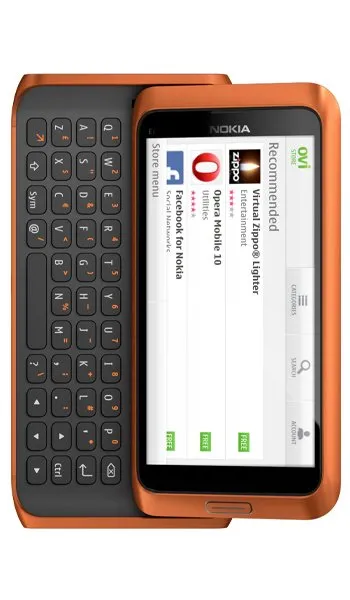
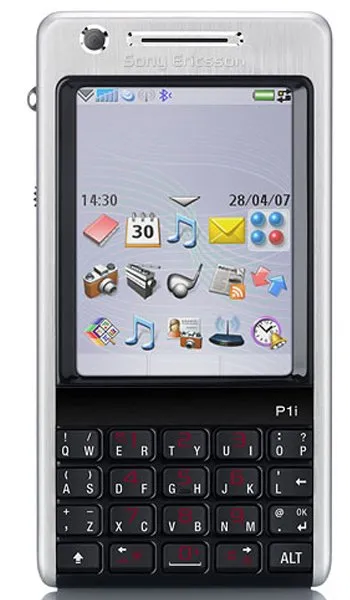
Brief information about compared phones: Nokia E7 , Sony Ericsson P1Nokia E7 2010 year of release. cpu 680 MHz ARM 11. screen 4". with resolution 360x640. Smartphone has 0 megapixel front camera and 8 megapixel main camera . Sony Ericsson P1 2007 year of release. cpu 32-bit Philips Nexperia PNX4008 208 MHz. screen 2.6". with resolution 240x320. Smartphone has 0 megapixel front camera and 3 megapixel main camera . |
||||
| Display | Technology | AMOLED | TFT | |
| Touchscreen | capacitive touchscreen | resistive touchscreen | ||
| Display colors | 16M | 256K | ||
| Screen size | 4" inch | 2.6" inch | ||
| Screen area | 44.1 cm2 | 20.9 cm2 | ||
| Screen format | 16:9 (height:width) | 4:3 (height:width) | ||
| Screen to body ratio | 57.1% | 35.9% | ||
| Screen resolution | 360 x 640 px | 240 x 320 px | ||
| PPI /points per inch/ | 184 PPI | 154 PPI | ||
| Screen protection | Corning Gorilla Glass | |||
| Camera and Video | Rear camera, main | 8 MP, Single | 3.15 MP, Single | |
| Camera specs | 8 MP | 3.15 MP, AF | ||
| Functions | Dual-LED flash | LED flash | ||
| Video | 720p@25fps, 720p@30fps (via SW update) | Yes | ||
| Front camera, selfie | 0.3 MP, Single | 0.3 MP, Single | ||
| Specifications | VGA | VGA videocall camera | ||
| Performance | Operating system OS | Symbian^3, upgradable to Nokia Belle OS | Symbian 9.1, UIQ 3.0 | |
| Processor CPU | 680 MHz ARM 11 | 32-bit Philips Nexperia PNX4008 208 MHz | ||
| Graphics processor GPU | Broadcom BCM2727 | |||
| External memory | No | Memory Stick Micro (M2), up to 4 GB, 512 MB included | ||
| Internal memory | 16 GB, 256 MB RAM, 1 GB ROM | 160 MB, 128 MB RAM, 256 MB ROM | ||
| General specs | Release date | 2010, September | 2007, May | |
| Dimensions (HxWxD) | 123.7 Х 62.4 Х 13.6 mm | 106 Х 55 Х 17 mm | ||
| Weight | 176 g | 124 g | ||
| Colors | Dark Grey, Silver White, Green, Blue, Orange | Silver black | ||
| Battery | 1200 mAh, Non-removable Li-Ion | 950 mAh, Removable Li-Po | ||
| Approximate price | 150 EUR | 170 EUR | ||
| Battery life | Stand by time- Up to 432 h (2G) / Up to 480 h (3G) Talking time- Up to 9 h (2G) / Up to 5 h (3G) | Stand by time- Up to 440 h (2G) / Up to 350 h (3G) Talking time- Up to 10 h (2G) / Up to 3 h 30 min (3G) | ||
| Communication and Connectivity | SIM card | Mini-SIM | Mini-SIM | |
| Network | Show all network frequencies: -2G - GSM 850 / 900 / 1800 / 1900 | Show all network frequencies: -2G - GSM 900 / 1800 / 1900 | ||
| Speed | HSPA 10.2/2 Mbps | Yes, 384 kbps | ||
| GPRS | Class 32 | Class 10 | ||
| Edge | Class 32 | No | ||
| Wi-Fi | Wi-Fi 802.11 b/g/n | Wi-Fi 802.11b | ||
| GPS | Yes, with A-GPS; Ovi Maps 3.0 | No | ||
| NFC | ||||
| USB | microUSB 2.0, USB Host | 2.0 | ||
| Bluetooth | 3.0, A2DP | 2.0, A2DP | ||
| Harmful irradiation | SAR - 0.93 W/kg (head) 1.23 W/kg (body) SAR EU - 0.56 W/kg (head) | SAR - 0.98 W/kg (head) 1.10 W/kg (body) SAR EU - 0.56 W/kg (head) | ||
| Music and Audio | Radio | Stereo FM radio, RDS | Stereo FM radio, RDS | |
| Headphone jack | Yes | No | ||
| Others | Nokia ClearBlack display | Handwriting recognition | ||
| Other features | Dop | Sensors Accelerometer, proximity, compass - TV-out (720p video) via HDMI and composite -Dolby Digital Plus via HDMI -MP3/WAV/eAAC+/WMA player -MP4/H.264/WMV player -Voice command/dial -Document editor (Word, Excel, PowerPoint, PDF) -Video/photo editor -Voice memo/dial -Predictive text input | , Infrared port - Media Player (MP3, AAC, video) -SyncML -Document viewer (Word, Excel, PowerPoint, PDF) -Business card scanner -Organizer -Voice memo - P1i UMTS/900/1800/1900 MHz for Europe P1c GSM 900/1800/1900 MHz for Mainland China | |